 Image 1 of 1
Being hard on yourself used to work. It kept you moving, pushing, performing. But at some point, the drive that got you here became the thing quietly wearing you down.
Self-criticism isn't just a mindset problem. It's a deeply wired pattern — one your brain built over years to keep you safe, motivated, and accepted. And because it worked, it stuck. The problem is that your nervous system never got the memo that you don't need it anymore.
This workbook doesn't ask you to think positive or just be nicer to yourself. It takes you through the actual process of understanding how self-criticism gets maintained, where it shows up most in your life, and — most importantly — how to start replacing it with something that genuinely works better.
Self-compassion isn't soft. It's a performance-enhancing skill for your mind, body, and the life you're trying to build.
Grounded in psychological research and built on the same frameworks Elise uses with her 1:1 coaching clients, this is a practical, honest guide for people who are ready to stop punishing themselves into growth — and start building it from a steadier, more sustainable place.
This workbook is for you if...
You know you're hard on yourself — but understanding why hasn't made it any easier to stop.
Your achievements feel hollow or never quite enough, no matter what you accomplish.
You're exhausted — not from the work itself, but from the running commentary in your head.
You worry that being kinder to yourself means losing your edge or your drive.
You want a structured, evidence-based process — not just journalling prompts and feel-good quotes.
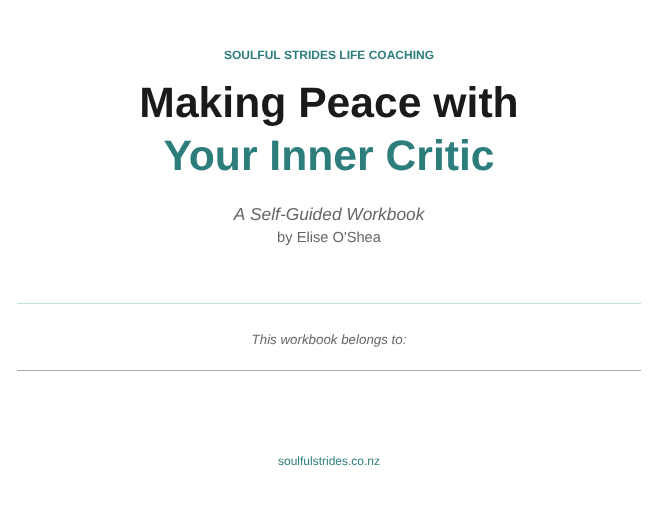
Pairs well with: Making Peace with Your Inner Critic. That workbook focuses on understanding and reframing the inner critic voice. This one goes deeper into the patterns, habits, and daily practices that make the shift stick. Together, they cover the full picture.
Evidence-based, always. Every Soulful Strides workbook is grounded in psychological research and the same frameworks Elise uses with her 1:1 coaching clients. No fluff, no toxic positivity — just practical tools that actually work.
Being hard on yourself used to work. It kept you moving, pushing, performing. But at some point, the drive that got you here became the thing quietly wearing you down.
Self-criticism isn't just a mindset problem. It's a deeply wired pattern — one your brain built over years to keep you safe, motivated, and accepted. And because it worked, it stuck. The problem is that your nervous system never got the memo that you don't need it anymore.
This workbook doesn't ask you to think positive or just be nicer to yourself. It takes you through the actual process of understanding how self-criticism gets maintained, where it shows up most in your life, and — most importantly — how to start replacing it with something that genuinely works better.
Self-compassion isn't soft. It's a performance-enhancing skill for your mind, body, and the life you're trying to build.
Grounded in psychological research and built on the same frameworks Elise uses with her 1:1 coaching clients, this is a practical, honest guide for people who are ready to stop punishing themselves into growth — and start building it from a steadier, more sustainable place.
This workbook is for you if...
You know you're hard on yourself — but understanding why hasn't made it any easier to stop.
Your achievements feel hollow or never quite enough, no matter what you accomplish.
You're exhausted — not from the work itself, but from the running commentary in your head.
You worry that being kinder to yourself means losing your edge or your drive.
You want a structured, evidence-based process — not just journalling prompts and feel-good quotes.
Pairs well with: Making Peace with Your Inner Critic. That workbook focuses on understanding and reframing the inner critic voice. This one goes deeper into the patterns, habits, and daily practices that make the shift stick. Together, they cover the full picture.
Evidence-based, always. Every Soulful Strides workbook is grounded in psychological research and the same frameworks Elise uses with her 1:1 coaching clients. No fluff, no toxic positivity — just practical tools that actually work.